
Help build the largest human-edited
directory of the web dedicated to travels!
...»
Australian
outback
It’s called a sunburnt country, but even in the scorched desert
you’ll find purple vegetation and lush green waterholes. You’ll
also find red hills and fiery sunsets, dinosaur footprints and
Aboriginal carvings, colourful characters and rustic pubs.
Take a scenic flight and see the monumental splendour of the
rock basin of Wilpena Pound roll out beneath you, then explore
the legendary waterholes of the Flinders Ranges. See Aboriginal
art at Arkaroo Rock and explore the area’s pastoral history at
Wilpena Pound Station. Afterwards, head to a friendly pub and
taste-test some of the area’s famous bush tucker while swapping
stories with the locals.
Join a campfire and hear the poetry of the outback people at the
spiritual homeland of the Aussie ‘bushy’. Here you can learn
about the history of the outback and the people who call it home
at the Stockman’s Hall of Fame. Home of the world’s first flying
surgeon and the birthplace of our national airline Qantas,
there’s much to do in and around this legendary outback town.
Discover distinctive desert landscapes and an oasis of lakes
around the former mining town known as Silver City. Once the
world’s largest silver, lead and zinc mine, Broken Hill is now
famous for its artists, who draw inspiration from the clear
light and expansive vistas. Take a sunset stroll around the
Living Desert Sculptures, watch birds around Menindee Lakes and
do a radio lesson in the world’s largest virtual classroom at
the School of the Air ...»
Wellness
and spas in Sweden
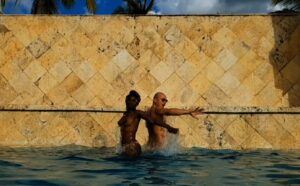
The popularity of spas in Sweden is increasing as many find
that they need some extra pampering to balance their hectic
lifestyles.
Today a spa experience can offer more than just the treatments
enjoyed: you can go to a spa in the far north under the midnight
sun, unwind at a spa nestled in the magical landscape of Gotland
or visit a spa in the heart of a bustling Swedish city.
In the very north of the country, 300 kilometres above the
Arctic Circle lies Riksgränsen, a ski resort located in Lapland,
an area of Sweden which is legendary for its extremes: dark all
winter, light all summer and home to the longest ski season in
the country. The best skiing Sweden has to offer in June, for
instance, is found here.
Add to all of this that the area now has a full-service spa,
Riksgränsen Alpine Spa, which offers traditional massage and
skin care treatments, sports medicine, along with elements of
healing methods borrowed from the area’s indigenous inhabitants,
the Sami people.
This is a spa that promises visitors a unique experience,
whether they arrive at the height of winter or the middle of
summer. On the southernmost tip of the Swedish island of
Gotland, in a magical landscape of endless sea views on the
horizon, sandy beaches and jutting rock formations called raukar,
you will find Suderhälsan...»
120
years later in Switzerland
Heidi is the most successful and best-known "literary" child of
that most famous Swiss author, Johanna Spyri. In the eleven
decades since Heidi first appeared, her presence has continued
to shine as a significant life force. Heidi has been translated
into about 50 languages and printed in an equivalent number of
millions of copies.
First of all there is the force of the fable itself, coherent
and at the same time so simple, that every child can "see the
light". Moreover there is a certain dependable differentiation
among the personalities that appear in the story: genuine,
loveable, humorous, and completely natural Heidi; clumsy Peter
("close to being a fool, but not quite", as C. F. Meyer
observed); grumpy, patriarchal, strict but ever so kind Alm-Uncle
(Alpöhi); blind, pitiable Grandmother; rich but at the same time
poor, crippled Klara; stupid, hard-hearted Fräulein Rottenmeier;
smart, loving Grandma; the friendly, understanding doctor. In
all these cases it's clear what kind of people these characters
are.
Does this paint too much of a "black and white" picture? In a
certain sense, yes, but the story is depicted in such beautiful
fashion that it helps the reader imagine events all the more
colourfully. Is there a simplistic separation of Good and Evil?
That may be true too, but this should not be considered alone -
and in general this is the appeal of most fairy stories that
comprise the most beautiful treasure of all folk literatures.
Does it have an unrealistic "happy ending" in a world that is
anything but happy?...»